
Overview
The Glucuronoyl Esterase Assay Kit (MDBGEUX3) provides a simple, robust, and highly specific spectrophotometric method for the quantitative measurement of glucuronoyl esterase (GE) activity. Glucuronoyl esterases (CE15 family) are key enzymes involved in lignin hydrolysis, cleaving the ester linkages between lignin polyphenols and glucuronoxylan in lignocellulosic biomass. This kit addresses the critical need for reliable GE activity measurement in biofuel research, enzyme discovery, and industrial biotechnology.
Unique Features
-
Novel Chromogenic Substrate: Employs a water-soluble GEUX3 substrate with a 4-O-methyl group on the glucuronic acid residue—a key feature for optimal GE recognition
-
Enzyme-Coupled Assay: Contains ancillary enzymes (α-glucuronidase and β-xylosidase) that sequentially hydrolyze the GE reaction product, releasing p-nitrophenol for colorimetric detection at 400 nm
-
High Specificity: GEUX3 is not hydrolyzed by enzymes other than glucuronoyl esterase, enabling specific assay of GE in complex samples such as fermentation broths and industrial enzyme cocktails
-
Automation-Ready: Solution-based format suitable for auto-analyzers and high-throughput screening
-
100 Assays per Kit: Sufficient reagent for 100 determinations
Kit Components
-
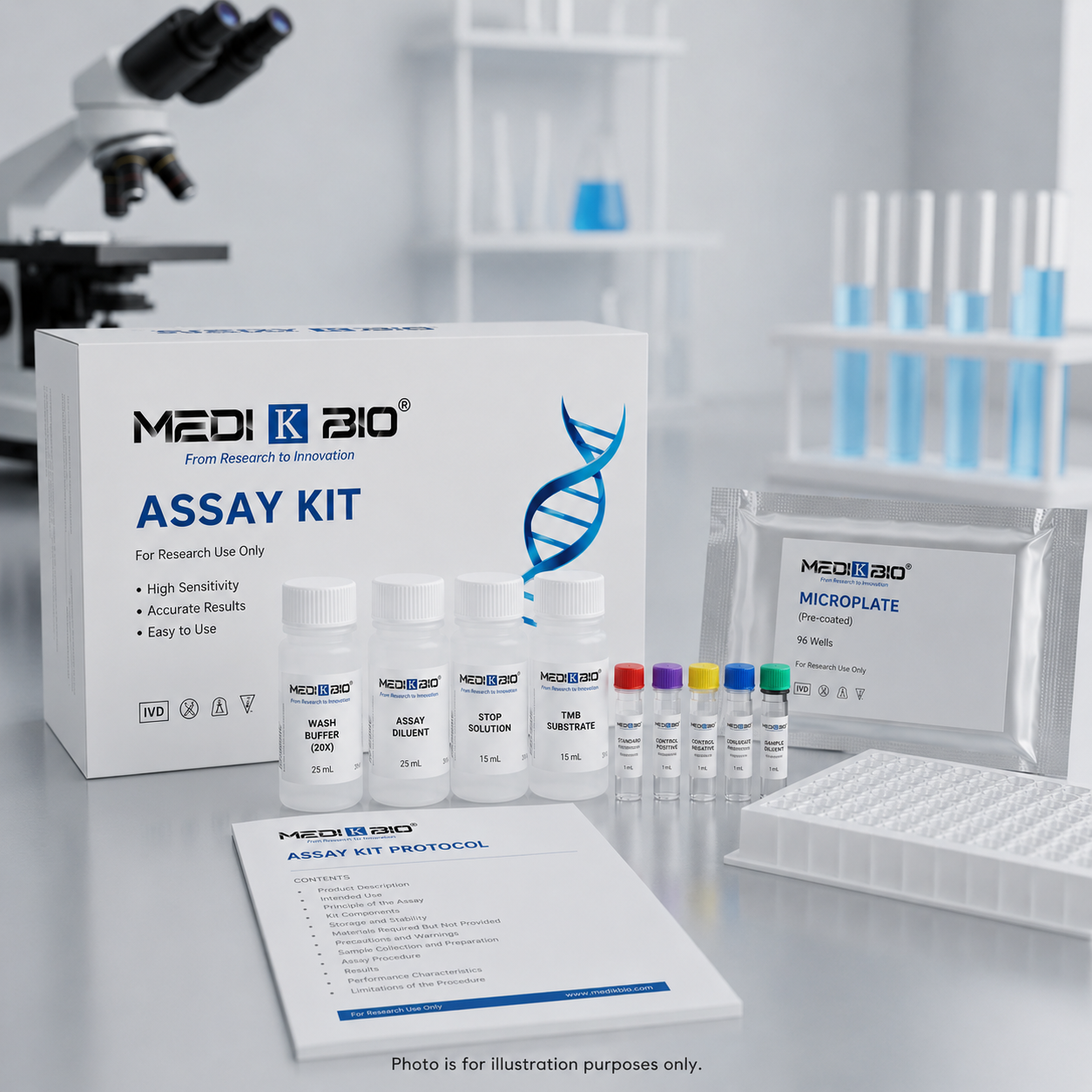
Bottle 1: GEUX3 Substrate powder (p-nitrophenyl-2²-(methyl 4-O-methyl-α-D-glucopyranosyluronate)-β-D-xylobioside plus α-glucuronidase and β-xylosidase). Lyophilized; stable >4 years below −10°C
-
Bottle 2: Glucuronoyl esterase control solution (2.2 U/mL on GEUX3 substrate, exact activity stated on vial). Stable >4 years; store sealed below −10°C
-
Full assay protocol included
Applications
Ideal for:
-
Lignocellulose biodegradation and biofuel production research
-
Screening and characterization of CE15 family glucuronoyl esterases
-
Quality control of industrial enzyme preparations
-
Plant cell wall degradation studies
-
Enzyme discovery and high-throughput screening
Assay Principle
The GEUX3 Reagent contains three components: (1) the colorimetric substrate, (2) β-xylosidase, and (3) α-glucuronidase. Upon hydrolysis of the methyl ester group by glucuronoyl esterase, the sequential activity of the ancillary enzymes releases p-nitrophenol. The reaction is terminated with tri-sodium phosphate solution (pH 12), and absorbance is measured at 400 nm. The rate of p-nitrophenol release directly correlates with GE activity.
Storage & Stability
-
GEUX3 Substrate (Bottle 1): Store lyophilized below −10°C; stable >4 years. After dissolution, stable >2 years below −10°C
-
Control Enzyme (Bottle 2): Store sealed below −10°C; stable >4 years
-
Dissolved Reagent: Divide into aliquots and store below −10°C between uses; keep on ice during use
Required Accessories (not supplied)
-
Spectrophotometer or microplate reader set at 400 nm
-
Thermostated water bath set at 40°C
-
Positive displacement pipettor, micro-pipettors, glass test tubes
-
Buffer A (0.1 M sodium phosphate, pH 6.5, with sodium azide)
-
Buffer B (0.01 M sodium phosphate, pH 6.5, with sodium azide)
-
Stopping Reagent (2% w/v tri-sodium phosphate solution, pH 12.0)
Why Choose This Kit?
-
First Commercially Available GE Assay: Fills the critical gap for commercially available diagnostic tools for glucuronoyl esterase study
-
Specific and Accurate: Selective measurement of GE even in complex industrial enzyme cocktails
-
Quantitative and Rapid: User-friendly format suitable for routine analysis
-
High-Throughput Compatible: Easily automatable for screening applications
-
Proven Performance: Linearity, repeatability, and stability data validated across multiple pH points and enzyme concentrations
Market Leader Advantage
Trusted by leading bioenergy research laboratories and industrial biotechnology companies, the MDBGEUX3 kit delivers consistent, publication-ready results for glucuronoyl esterase activity measurement. Whether you are screening novel CE15 enzymes, optimizing biomass degradation cocktails, or characterizing industrial enzyme preparations, this kit provides the accuracy and specificity you need.
References
-
Spanikova, S. & Biely, P. (2006). Glucuronoyl esterase – Novel carbohydrate esterase produced by Schizophyllum commune. FEBS Letters, 580, 4597-4601.
-
Biely, P. (2016). Microbial Glucuronoyl Esterases: 10 Years after Discovery. Appl. Environ. Microbiol., 82, 7014-7018.
-
Monrad, R. N., et al. (2018). Glucuronoyl esterases: diversity, properties and biotechnological potential. Crit. Rev. Biotechnol., 1-16.
Note: For research use only. Not for diagnostic use.
Reviews
There are no reviews yet.